And there is a time you have such a crystal-clear image in the head. A man of silver hair, and storm, coat blowing, eyes shining faint of blue. Then you open a blank canvas and your hands completely betray you. 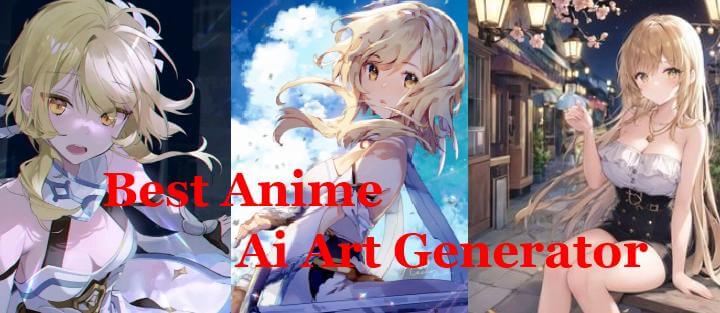 This is exactly why anime AI generators exploded in popularity. These tools don't care that you barely passed high school art. In them, a text prompt — occasionally one that is quite oddly precise like "sad kitsune girl, cherry blossom rain, Studio Trigger style" — is regurgitated in less than three seconds that a freelance illustrator would have spent days creating. The results are sometimes breathtaking. It leaves your character, now and then, with half a dozen fingers. Honestly, that's part of the charm. But what's actually happening under the hood? Most anime AI generators are conditioned on massive libraries of existing anime art. Millions of pictures — we are talking of millions — from all the traditional Miyazaki frames to Pixiv fan art uploaded at 2 AM by someone who lives on instant noodles and passion. The AI absorbs patterns: how hair moves in action sequences, how soft light falls on faces, why shojo manga eyes are comically oversized. Here's how diffusion models — the engine behind most of these find here tools — actually work: the AI begins with random visual static and gradually refines it into a coherent image based on your instructions. With each pass, noise fades and structure emerges. It's like watching someone develop a photograph in a darkroom — except the darkroom is a cluster of GPUs and the photographer has seen every anime ever made. Key players have carved out their niches: NovelAI, Niji Journey (Midjourney's anime-focused mode), and SeaArt all serve different crowds. NovelAI is built around Danbooru-style tags that give power users a near-cheat-level advantage. Niji Journey feels freer, sketchier, and more spontaneous. SeaArt strikes a middle ground — user-friendly without requiring an essay-length prompt. The thorniest problem in all of this? Character consistency. Run the same character through twice and you're likely to get two entirely different people — same outfit, different face. For anyone attempting real narrative work or a comic series, this inconsistency is maddening. LoRA models changed that. A LoRA, or Low-Rank Adaptation, allows you to train the generator on as few as 20–30 images of your character. Post-training, the model retains that character. Not perfectly. But enough so your purple-eyed swordsman in panel two doesn't become a green-eyed accountant by panel five. So who's really using these tools? More users than most assume. Solo game developers with zero budget for illustration. Webtoon and manga creators using AI-generated panels as placeholders while final art gets drawn by hand. Authors who simply want to visualize their characters for the first time. And a sprawling social media economy built around AI-generated characters — entrepreneurial venture or digital SOS, take your pick. Some artists are angry — and not without reason. A lot of the early training data was scraped without consent. That's a real grievance, not gatekeeping. The debate around attribution and compensation for AI-generated art is far from resolved. Far from it. But the tools exist. People use them. Artists themselves are beginning to explore them — for mood boards, for presenting lighting references to clients, for visual research they'd otherwise spend hours hunting down. Crafting effective prompts is genuinely a learned craft. New users often don't grasp that hoping for a lucky result is like feeding random coordinates into a GPS and expecting a great restaurant recommendation. It'll navigate to something. Just not the thing you had in mind. Effective prompts follow a reliable formula: style first — anime, detailed lineart, cel shading — then subject, mood, lighting, and a negative prompt listing what to exclude. Negative prompting is far more powerful than most beginners realize. Instructing the model to exclude extra limbs, text, and watermarks makes a bigger difference than most expect. The process is almost entirely iterative. Generate eight versions. Pick the closest one. Use it as an image reference. Generate eight more. This isn't a vending machine for masterpieces — it's a dialogue where one side communicates only through images. So what comes next? Video is the next frontier — and it's already begun. New generators can already animate characters with anime aesthetics, including lip sync, idle movement, and blinking. Quality is uneven, especially around hair and hands (the perennial weak spot for AI and human artists alike), but the direction is clear. Real-time generation is also emerging. Some platforms already let you sketch a rough character outline and watch it transform into polished anime art as you draw. It's not replacing artists — it's more like having an AI co-pilot that's extremely fast and slightly unhinged. Whether you find that thrilling or unsettling likely comes down to your vantage point. It's already in motion, and those thriving in this space long ago stopped debating it — they just kept creating.