You know that feeling — a perfectly vivid image locked in your mind. A silver-haired figure, storm coat billowing, eyes glowing with a faint blue light. Then you open a blank canvas and your hands completely betray you. 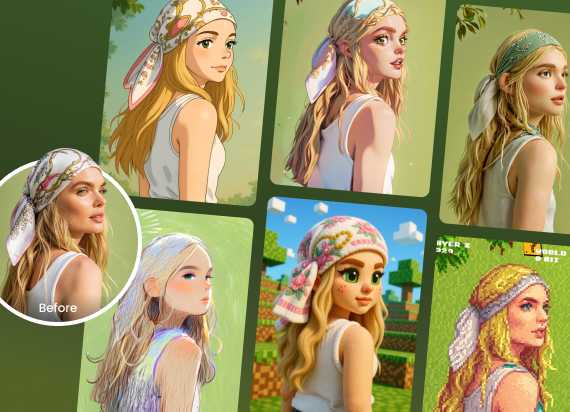 That gap between imagination and execution is precisely why anime AI generators broke the internet. Such tools fail to consider the fact that you have failed to clear high school art class. Drop in a hyper-specific prompt — say, "sad kitsune girl, cherry blossom rain, Studio Trigger style" — and within seconds you get what would have cost an illustrator days of work. Sometimes it looks stunning. Sometimes your character mysteriously acquires extra fingers. But that's half the fun. But what's actually happening under the hood? Nearly all anime AI generators learn from colossal databases of pre-existing anime images. Millions of pictures — we are talking of millions — from all the traditional Miyazaki frames to Pixiv fan art uploaded at 2 AM by someone who lives on instant noodles and passion. The model learns the patterns: the way hair flows in a fight scene, what soft lighting looks like on skin, why shojo manga eyes are the size of dinner plates. Here's how diffusion models — the engine behind most of these tools — actually work: the AI begins with random visual static and gradually refines it into a coherent image based on your instructions. Every iteration strips away chaos and introduces clarity. It's like watching someone develop a photograph in a darkroom — except the darkroom is a cluster of GPUs and the photographer has seen every anime ever made. The space has clear frontrunners: NovelAI, Niji Journey (Midjourney's anime-dedicated mode), and SeaArt, each with a distinct user base. NovelAI is deeply integrated with Danbooru tags, which act almost like developer shortcuts. Niji Journey feels freer, sketchier, and more spontaneous. SeaArt splits the difference, offering accessibility without sacrificing too much creative control. The interesting part: character consistency. Run the same character through twice and you're likely to get two entirely different people — same outfit, different face. This is the single most frustrating limitation for anyone trying to use these tools for actual storytelling or comic production. Then LoRA models arrived and rewrote the rules. A LoRA (Low-Rank Adaptation) lets you fine-tune a generator on a small set of your own reference images — just 20 to 30 images of your specific character. The generator holds onto those details after the training process. Imperfect, yes. But enough to keep your purple-eyed swordsman from inexplicably becoming a green-eyed accountant three panels later. So who's really using these tools? More people than you'd expect. Independent game devs who can't afford dedicated artists. Webtoon and manga artists using generated frames as rough placeholders until hand-drawn finals are complete. Writers who just want to see their characters exist, even once. And a sprawling social media economy built around AI-generated characters — entrepreneurial venture or digital SOS, take your pick. Some artists are angry — and not without reason. Enormous quantities of early training data were collected through unauthorized scraping. That's a substantive complaint, not mere defensiveness. Questions of attribution and artist compensation in the AI art space are nowhere near settled. Far from it. The tools exist regardless. And people are using them. Even professional artists are experimenting — using them for mood boards, client presentations, lighting references, and visual research that used to eat up hours. Crafting effective prompts is genuinely a learned craft. What newcomers don't realize is that using an anime AI generator hoping to get lucky is like handing GPS a random set of coordinates and asking it to find you something good to eat. It'll navigate to something. Just not the thing you had in mind. Strong prompting has a recognizable shape: start with style (anime, detailed lineart, cel shading), then describe subject, mood, and lighting, and close with a negative prompt for what you want to avoid. That last part is underrated. Telling the model "no extra limbs, no text, no watermark" does more heavy lifting than people imagine. The process is almost entirely iterative. Run eight outputs. Select the best. Feed it back as a reference. Run eight more. This isn't a vending machine for masterpieces — it's a dialogue where one side communicates only through images. Where does the trajectory point? Video is the obvious next step, and it's already underway. New generators can already animate characters with anime aesthetics, including lip sync, idle movement, and blinking. Results are inconsistent, particularly with hair and hands — hands are the eternal enemy of both AI and human artists — but the trend line is obvious. Live generation is another frontier opening up. Certain tools now allow you to sketch a character loosely and see it rendered in anime style in real time as your pen moves. This isn't about replacing artists — it's closer to having a wildly fast, mildly chaotic creative collaborator. Whether you find that thrilling or unsettling likely comes down to your vantage more point. It's already in motion, and those thriving in this space long ago stopped debating it — they just kept creating.