It happens to everyone: a razor-sharp vision sitting right behind your eyes. Picture it: silver hair, a coat caught in the wind, and those barely-glowing blue eyes. Then you open a blank canvas and your hands completely betray you. 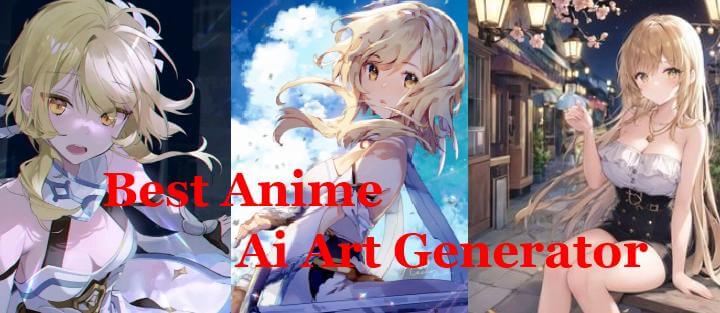 This is exactly why anime AI generators exploded in popularity. Such tools fail to consider the fact that you have failed to clear high school art class. In them, a text prompt — occasionally one that is quite oddly precise like "sad kitsune girl, cherry blossom rain, Studio Trigger style" — is regurgitated in less than three seconds that a freelance illustrator would have spent days creating. Sometimes it looks stunning. It leaves your character, now and then, with half a dozen fingers. But that's half the fun. How then do these things work? Most anime AI generators are conditioned on massive libraries of existing anime art. We're talking tens of millions of images — Miyazaki classics to late-night Pixiv uploads from artists running on instant noodles and sheer devotion. The model learns the patterns: the way hair flows in a fight scene, what soft lighting looks like on skin, why shojo manga eyes are the size of dinner plates. Here's how diffusion models — the engine behind most of these tools — actually work: you feed the AI pure visual noise and it progressively sculpts an image guided by your prompt. Each step removes noise and adds structure. It's like watching someone develop a photograph in a darkroom — except the darkroom is a cluster of GPUs and the photographer has seen every anime ever made. Key players have carved out their niches: NovelAI, Niji Journey (Midjourney's anime-focused mode), and SeaArt all serve different crowds. NovelAI leans heavily into the Danbooru tagging system — those tags function like a cheat code. Niji Journey feels freer, sketchier, and more spontaneous. SeaArt sits in between — approachable without demanding you write a dissertation just to get started. The thorniest problem in all of this? Character consistency. Tell most tools to generate your character a second time and you'll receive a stranger in the same clothes. For anyone attempting real narrative work or a comic series, this inconsistency is maddening. LoRA models changed that. A LoRA (Low-Rank Adaptation) lets you fine-tune a generator on a small set of your own reference images — just 20 to 30 images of your specific character. Post-training, the model retains that character. Not flawlessly. But enough that your purple-eyed swordsman stays a purple-eyed swordsman instead of morphing into a green-eyed accountant. Who's actually using these generators? More people than you'd expect. Independent game devs who can't afford dedicated artists. Webtoon and manga creators using AI-generated panels as placeholders while final art gets drawn by hand. Authors who simply want to visualize their characters for the first time. Plus a full social media content pipeline churning out AI anime characters, which reads as either a business model or a distress signal, depending on who you ask. Some artists are angry — and not without reason. Enormous quantities of early training data were collected through unauthorized scraping. That's a real grievance, not gatekeeping. The debate around attribution and compensation for AI-generated art is far from resolved. Not even close. Still, the tools are here. People are using them. Artists themselves have started incorporating them into workflows — mood boards, lighting references, client pitch materials, rapid concept exploration. Prompting is its own skill. New users often don't grasp that hoping for a lucky result is like feeding random coordinates into a GPS and expecting a great restaurant recommendation. You'll arrive somewhere. Probably not the right destination. Good prompting has a consistent structure: style first (anime, detailed lineart, cel shading), then subject, mood, lighting, and finally a negative prompt specifying what you don't want. That last part is underrated. Telling the model "no extra limbs, no text, no watermark" does more heavy lifting than people imagine. The process is almost entirely iterative. Run eight ai anime video generator github outputs. Select the best. Feed it back as a reference. Run eight more. It's not "press button, receive masterpiece" — it's a conversation where one party speaks entirely in pictures. Where does the trajectory point? Video is the obvious next step, and it's already underway. Emerging platforms can bring a character to life in anime style — lip sync, gentle motion, blinking eyes. Quality is uneven, especially around hair and hands (the perennial weak spot for AI and human artists alike), but the direction is clear. Live generation is another frontier opening up. Several tools now let you draw a rough outline and watch it become finished anime art in real time. It's not replacing artists — it's more like having an AI co-pilot that's extremely fast and slightly unhinged. Whether that's exciting or terrifying probably depends on where you're sitting. It's already in motion, and those thriving in this space long ago stopped debating it — they just kept creating.