You know that feeling — a perfectly vivid image locked in your mind. Picture it: silver hair, a coat caught in the wind, and those barely-glowing blue eyes. But the moment you pick up a brush or stylus, your hands forget everything. 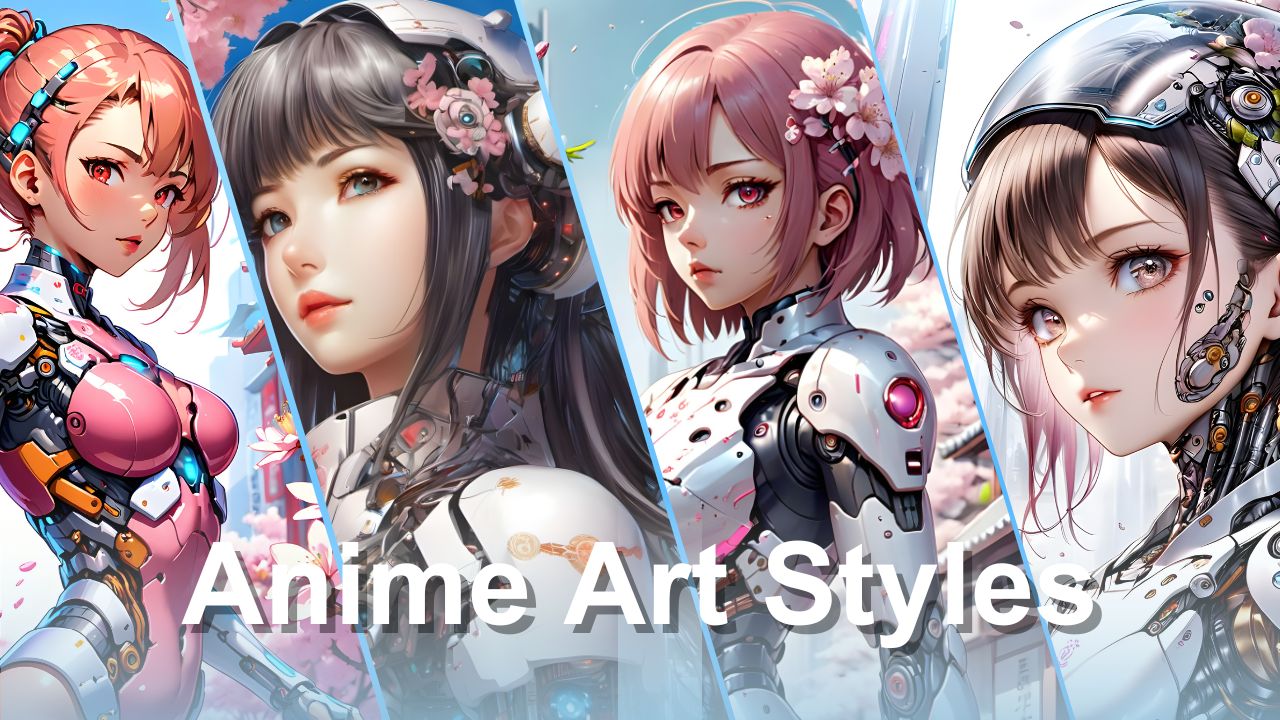 The fact that anime AI generators went viral is specifically because of this reason. Such tools fail to consider the fact that you have failed to clear high school art class. Feed them a weirdly specific prompt like "sad kitsune girl, cherry blossom rain, Studio Trigger style" and they'll spit out a result in seconds that would take a freelance illustrator days to produce. The results are sometimes breathtaking. Sometimes your character mysteriously acquires extra fingers. But that's half the fun. How then do these things work? The majority of anime AI generators are trained on enormous collections of existing artwork. We're talking tens of millions of images — Miyazaki classics to late-night Pixiv uploads from artists running on instant noodles and sheer devotion. It picks up on everything — the sweep of hair during battle, the warmth of diffused lighting, the iconic dinner-plate-sized eyes of shojo manga. The diffusion model — the newest technology powering much of this — works like this: you feed the AI pure visual noise and it progressively sculpts an image guided by your prompt. Each step removes noise and adds structure. Imagine a darkroom photographer who has watched every anime ever created — and that darkroom is powered by industrial GPUs. The space has clear frontrunners: NovelAI, Niji Journey (Midjourney's anime-dedicated mode), and SeaArt, each with a distinct user base. NovelAI leans heavily into the Danbooru tagging system — those tags function like a cheat code. Niji Journey leans casual, imprecise, and experimental by nature. SeaArt splits the difference, offering accessibility without sacrificing too much creative control. The thorniest problem in all of this? Character consistency. Tell most tools to generate your character a second time and you'll receive a stranger in the same clothes. If you're building a story or a comic, this is the wall you hit fastest. LoRA models changed that. With a LoRA — Low-Rank Adaptation — you train the model on a small reference set of 20 to 30 images of your character. Post-training, the model retains that character. Imperfect, yes. But enough to keep your purple-eyed swordsman from inexplicably becoming a green-eyed accountant three panels later. So who's really using these tools? A broader audience than you might think. Solo game developers with zero budget for illustration. Comic creators filling in placeholder panels with AI art while they finish the polished, hand-drawn versions. Authors who simply want to visualize their characters for the first time. And an entire content ecosystem on social media generating AI characters — whether as a resources business or a cry for help, depending on your perspective. A number of artists are furious, and their frustration is legitimate. A lot of the early training data was scraped without consent. That's a substantive complaint, not mere defensiveness. The conversation about crediting and compensating artists for AI training data remains wide open. Far from it. Still, the tools are here. People are using them. Artists themselves are beginning to explore them — for mood boards, for presenting lighting references to clients, for visual research they'd otherwise spend hours hunting down. Crafting effective prompts is genuinely a learned craft. What newcomers don't realize is that using an anime AI generator hoping to get lucky is like handing GPS a random set of coordinates and asking it to find you something good to eat. You'll arrive somewhere. Probably not the right destination. Strong prompting has a recognizable shape: start with style (anime, detailed lineart, cel shading), then describe subject, mood, and lighting, and close with a negative prompt for what you want to avoid. That last part is underrated. Commands like "no extra limbs, no text, no watermark" quietly do an enormous amount of work. And iteration is everything. Run eight outputs. Select the best. Feed it back as a reference. Run eight more. Think of it less as a button and more as a back-and-forth, except your collaborator only speaks in visuals. So what comes next? Video is the obvious next step, and it's already underway. Emerging platforms can bring a character to life in anime style — lip sync, gentle motion, blinking eyes. The quality wavers, especially on hair and hands — hands remain the nemesis of every AI, human or otherwise — but the direction is unmistakable. Real-time generation is also emerging. Certain tools now allow you to sketch a character loosely and see it rendered in anime style in real time as your pen moves. It's not replacing artists — it's more like having an AI co-pilot that's extremely fast and slightly unhinged. How you feel about all this probably depends on which side of the equation you're on. It's already in motion, and those thriving in this space long ago stopped debating it — they just kept creating.