It happens to everyone: a razor-sharp vision sitting right behind your eyes. A man of silver hair, and storm, coat blowing, eyes shining faint of blue. But the moment you pick up a brush or stylus, your hands forget everything. 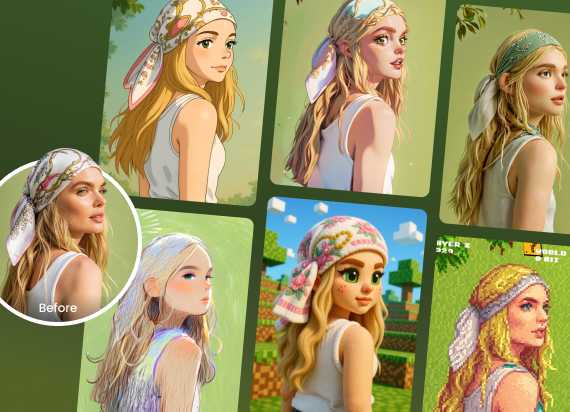 The fact that anime AI generators went viral is specifically because of this reason. These tools don't care that you barely passed high school art. Feed them a weirdly specific prompt like "sad kitsune girl, cherry blossom rain, Studio Trigger style" and they'll spit out a result in seconds that would take a freelance illustrator days to produce. The results are sometimes breathtaking. Other times your character hentaianime.video ends up with six fingers on one hand. Somehow, that's what makes it entertaining. How then do these things work? The majority of anime AI generators are trained on enormous collections of existing artwork. Millions upon millions of images, ranging from classic Miyazaki frames to Pixiv fan art posted at 2 AM by dedicated artists fueled by instant noodles. The model learns the patterns: the way hair flows in a fight scene, what soft lighting looks like on skin, why shojo manga eyes are the size of dinner plates. Diffusion models, which drive a large chunk of this technology, operate as follows: you start with pure noise and the AI chips away at it, step by step, shaped by your prompt. Every iteration strips away chaos and introduces clarity. Imagine a darkroom photographer who has watched every anime ever created — and that darkroom is powered by industrial GPUs. Platforms like NovelAI, Niji Journey — Midjourney's anime arm — and SeaArt have each found their audience. NovelAI is deeply integrated with Danbooru tags, which act almost like developer shortcuts. Niji Journey feels freer, sketchier, and more spontaneous. SeaArt strikes a middle ground — user-friendly without requiring an essay-length prompt. The interesting part: character consistency. Ask most generators to draw your original character twice and you'll get two completely different people wearing the same outfit. This is the single most frustrating limitation for anyone trying to use these tools for actual storytelling or comic production. LoRA models changed that. A LoRA, or Low-Rank Adaptation, allows you to train the generator on as few as 20–30 images of your character. The model remembers them after training. Imperfect, yes. But enough to keep your purple-eyed swordsman from inexplicably becoming a green-eyed accountant three panels later. Who exactly is behind all these generations? More users than most assume. Indie game developers with no art budget. Comic creators filling in placeholder panels with AI art while they finish the polished, hand-drawn versions. Writers desperately wanting to see their fictional people rendered in some tangible form. And a sprawling social media economy built around AI-generated characters — entrepreneurial venture or digital SOS, take your pick. Some artists are angry — and not without reason. Enormous quantities of early training data were collected through unauthorized scraping. That's a real grievance, not gatekeeping. The conversation about crediting and compensating artists for AI training data remains wide open. Not even close. Still, the tools are here. People are using them. Artists themselves are beginning to explore them — for mood boards, for presenting lighting references to clients, for visual research they'd otherwise spend hours hunting down. Crafting effective prompts is genuinely a learned craft. New users often don't grasp that hoping for a lucky result is like feeding random coordinates into a GPS and expecting a great restaurant recommendation. It'll navigate to something. Just not the thing you had in mind. Strong prompting has a recognizable shape: start with style (anime, detailed lineart, cel shading), then describe subject, mood, and lighting, and close with a negative prompt for what you want to avoid. That final section is criminally underused. Commands like "no extra limbs, no text, no watermark" quietly do an enormous amount of work. The process is almost entirely iterative. Run eight outputs. Select the best. Feed it back as a reference. Run eight more. It's not "press button, receive masterpiece" — it's a conversation where one party speaks entirely in pictures. So what comes next? Video is the obvious next step, and it's already underway. Emerging platforms can bring a character to life in anime style — lip sync, gentle motion, blinking eyes. The quality wavers, especially on hair and hands — hands remain the nemesis of every AI, human or otherwise — but the direction is unmistakable. Live generation is another frontier opening up. Several tools now let you draw a rough outline and watch it become finished anime art in real time. Think of it less as a replacement for artists and more as an AI assistant that works at lightning speed and occasionally goes off the rails. How you feel about all this probably depends on which side of the equation you're on. But it's already here, and the ones getting the most out of it stopped arguing and started making things.