You know that feeling — a perfectly vivid image locked in your mind. A man of silver hair, and storm, coat blowing, eyes shining faint of blue. But the moment you pick up a brush or stylus, your hands forget everything. 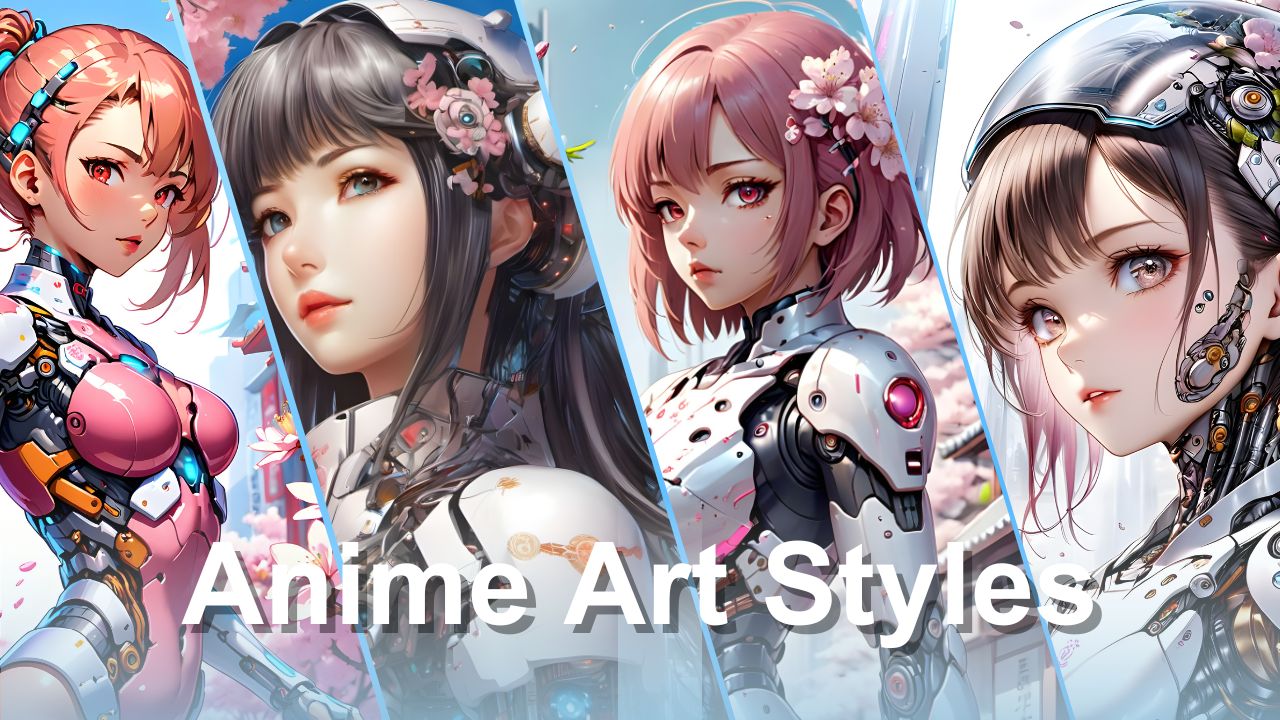 That gap between imagination and execution is precisely why anime AI generators broke the internet. Such tools fail to consider the fact that you have failed to clear high school art class. In them, a text prompt — occasionally one that is quite oddly precise like "sad kitsune girl, cherry blossom rain, Studio Trigger style" — is regurgitated in less than three seconds that a freelance illustrator would have spent days creating. Sometimes it looks stunning. Sometimes your character mysteriously acquires extra fingers. Honestly, that's part of the charm. But what's actually happening under the hood? The majority of anime AI generators are trained on enormous collections of existing artwork. We're talking tens of millions of images — Miyazaki classics to late-night Pixiv uploads from artists running on instant noodles and sheer devotion. The AI absorbs patterns: how hair moves in action sequences, how soft light falls on faces, why shojo manga eyes are comically oversized. Diffusion models, which drive a large chunk of this technology, operate as follows: you feed the AI pure visual noise and it progressively sculpts an image guided by your prompt. Every iteration strips away chaos and introduces clarity. It's like watching someone develop a photograph in a darkroom — except the darkroom is a cluster of GPUs and the photographer has seen every anime ever made. Key players have carved out their niches: NovelAI, Niji Journey (Midjourney's anime-focused mode), and SeaArt all serve different crowds. NovelAI is deeply integrated with Danbooru tags, which act almost like developer shortcuts. Niji Journey is looser, sketchier, more playful. SeaArt splits the difference, offering accessibility without sacrificing too much creative control. The thorniest problem in all of this? Character consistency. Ask most generators to draw your original character twice and you'll get two completely different people wearing the same outfit. If you're building a story or a comic, this is the wall you hit fastest. Then LoRA models arrived and rewrote the rules. A LoRA, or Low-Rank Adaptation, allows you to train the generator on as few as 20–30 images of your character. The model remembers them after training. Not perfectly. But enough so your purple-eyed swordsman in panel two doesn't become a green-eyed accountant by panel five. So who's really using these tools? More people than hentaianime.video you'd expect. Solo game developers with zero budget for illustration. Webtoon and manga creators using AI-generated panels as placeholders while final art gets drawn by hand. Authors who simply want to visualize their characters for the first time. And a sprawling social media economy built around AI-generated characters — entrepreneurial venture or digital SOS, take your pick. Some artists are angry — and not without reason. A lot of the early training data was scraped without consent. That's a genuine ethical issue, not protectionism. Questions of attribution and artist compensation in the AI art space are nowhere near settled. Not remotely. Still, the tools are here. People are using them. Artists themselves have started incorporating them into workflows — mood boards, lighting references, client pitch materials, rapid concept exploration. Crafting effective prompts is genuinely a learned craft. First-timers frequently don't understand that relying on luck with these tools is like giving a GPS nonsense coordinates and expecting it to route you somewhere worthwhile. It'll navigate to something. Just not the thing you had in mind. Strong prompting has a recognizable shape: start with style (anime, detailed lineart, cel shading), then describe subject, mood, and lighting, and close with a negative prompt for what you want to avoid. That last part is underrated. Instructing the model to exclude extra limbs, text, and watermarks makes a bigger difference than most expect. Iteration is the real game. Produce eight results. Keep the strongest. Use it as your seed image. Produce eight more. This isn't a vending machine for masterpieces — it's a dialogue where one side communicates only through images. So what comes next? Video is the obvious next step, and it's already underway. Emerging platforms can bring a character to life in anime style — lip sync, gentle motion, blinking eyes. Results are inconsistent, particularly with hair and hands — hands are the eternal enemy of both AI and human artists — but the trend line is obvious. Live generation is another frontier opening up. Some platforms already let you sketch a rough character outline and watch it transform into polished anime art as you draw. Think of it less as a replacement for artists and more as an AI assistant that works at lightning speed and occasionally goes off the rails. Whether you find that thrilling or unsettling likely comes down to your vantage point. But it's already here, and the ones getting the most out of it stopped arguing and started making things.