You know that feeling — a perfectly vivid image locked in your mind. A man of silver hair, and storm, coat blowing, eyes shining faint of blue. But the moment you pick up a brush or stylus, your hands forget everything. 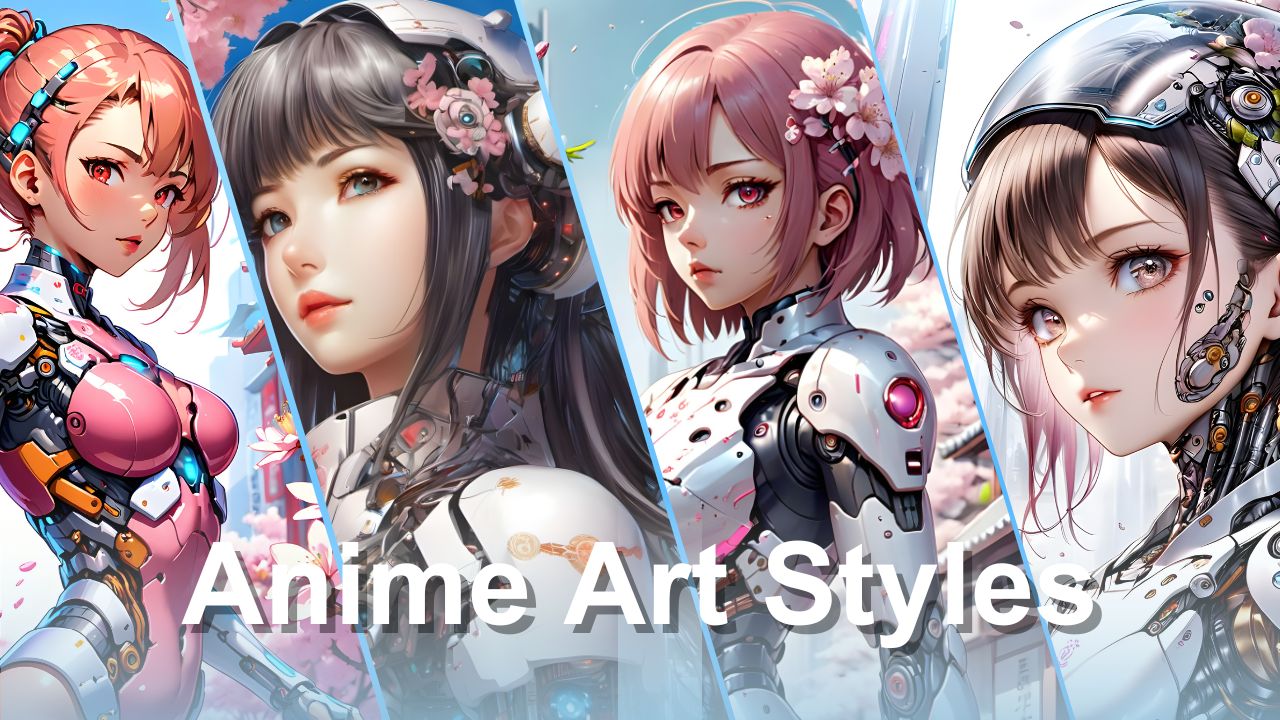 That gap between imagination and execution is precisely why anime AI generators broke the internet. These tools don't care that you barely passed high school art. Drop in a hyper-specific prompt — say, "sad kitsune girl, cherry blossom rain, Studio Trigger style" — and within seconds you get what would have cost an illustrator days of work. Occasionally, the output is genuinely gorgeous. Sometimes your character mysteriously acquires extra fingers. But that's half the fun. So how exactly do these generators function? The majority of anime AI generators are trained on enormous collections of existing artwork. Millions upon millions of images, ranging from classic Miyazaki frames to Pixiv fan art posted at 2 AM by dedicated artists fueled by instant noodles. The model learns the patterns: the way hair flows in a fight scene, what soft lighting looks like on skin, why shojo manga eyes are the size of dinner plates. The diffusion model — the newest technology powering much of this — works like this: the AI begins with random visual static and gradually refines it into a coherent image based on your instructions. Every iteration strips away chaos and introduces clarity. Think of it as darkroom photography, except the darkroom is a server rack of GPUs and the photographer has consumed every anime in existence. Key players have carved out their niches: NovelAI, Niji Journey (Midjourney's anime-focused mode), and SeaArt all serve different crowds. NovelAI is deeply integrated with Danbooru tags, which act almost like developer shortcuts. Niji Journey is looser, sketchier, more playful. SeaArt sits in between — approachable without demanding you write a dissertation just to get started. The thorniest problem in all of this? Character consistency. Tell most tools to generate your character a second time and you'll receive a stranger in the same clothes. If you're building a story or a comic, this is the wall you hit fastest. LoRA models changed everything. A LoRA, or Low-Rank hentaianime.video Adaptation, allows you to train the generator on as few as 20–30 images of your character. Post-training, the model retains that character. Not perfectly. But enough so your purple-eyed swordsman in panel two doesn't become a green-eyed accountant by panel five. Who's actually using these generators? A broader audience than you might think. Independent game devs who can't afford dedicated artists. Comic creators filling in placeholder panels with AI art while they finish the polished, hand-drawn versions. Authors who simply want to visualize their characters for the first time. And a sprawling social media economy built around AI-generated characters — entrepreneurial venture or digital SOS, take your pick. Many artists are upset, and the grievance is valid. Much of the initial training data was harvested without permission. That's a real grievance, not gatekeeping. The conversation about crediting and compensating artists for AI training data remains wide open. Far from it. But the tools exist. People use them. Artists themselves have started incorporating them into workflows — mood boards, lighting references, client pitch materials, rapid concept exploration. Prompting is its own skill. What newcomers don't realize is that using an anime AI generator hoping to get lucky is like handing GPS a random set of coordinates and asking it to find you something good to eat. You'll arrive somewhere. Probably not the right destination. Good prompting has a consistent structure: style first (anime, detailed lineart, cel shading), then subject, mood, lighting, and finally a negative prompt specifying what you don't want. That last part is underrated. Instructing the model to exclude extra limbs, text, and watermarks makes a bigger difference than most expect. Iteration is the real game. Produce eight results. Keep the strongest. Use it as your seed image. Produce eight more. It's not "press button, receive masterpiece" — it's a conversation where one party speaks entirely in pictures. Where is all this heading? The next frontier is video, and early tools are already pushing into it. Emerging platforms can bring a character to life in anime style — lip sync, gentle motion, blinking eyes. Results are inconsistent, particularly with hair and hands — hands are the eternal enemy of both AI and human artists — but the trend line is obvious. Real-time rendering is starting to become a reality. Certain tools now allow you to sketch a character loosely and see it rendered in anime style in real time as your pen moves. Think of it less as a replacement for artists and more as an AI assistant that works at lightning speed and occasionally goes off the rails. How you feel about all this probably depends on which side of the equation you're on. It's already in motion, and those thriving in this space long ago stopped debating it — they just kept creating.