It happens to everyone: a razor-sharp vision sitting right behind your eyes. A silver-haired figure, storm coat billowing, eyes glowing with a faint blue light. Then you open a blank canvas and your hands completely betray you. 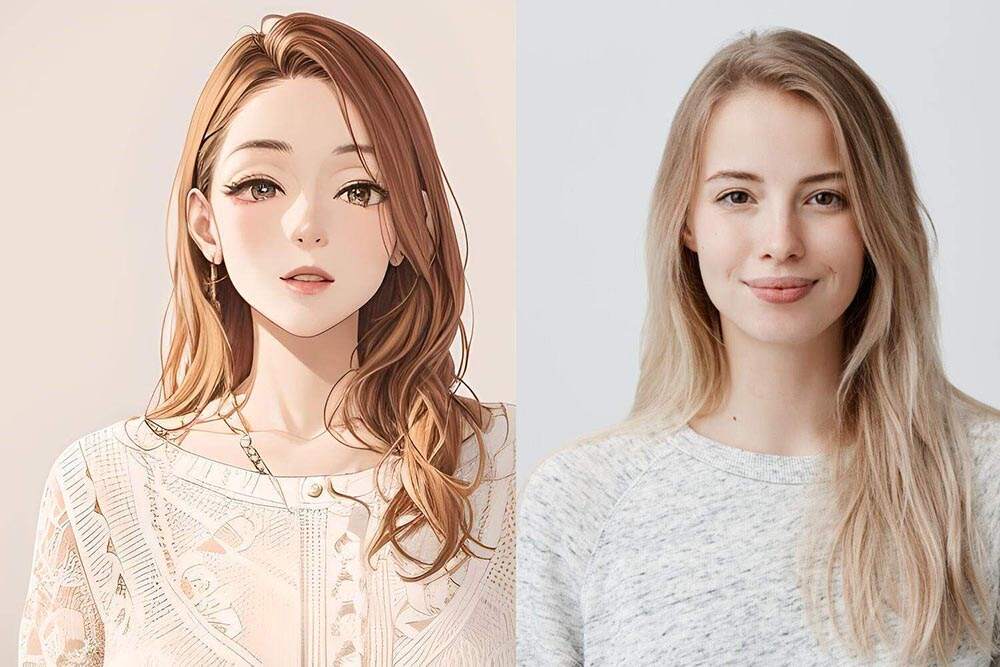 That gap between imagination and execution is precisely why anime AI generators broke the internet. Such tools fail to consider the fact that you have failed to clear high school art class. Feed them a weirdly specific prompt like "sad kitsune girl, cherry blossom rain, Studio Trigger style" and they'll spit out a result in seconds that would take a freelance illustrator days to produce. Occasionally, the output is genuinely gorgeous. It leaves your character, now and then, with half a dozen fingers. Somehow, that's what makes it entertaining. But what's actually happening under the hood? Most anime AI generators are conditioned on massive libraries of existing anime art. Millions upon millions of images, ranging from classic Miyazaki frames to Pixiv fan art posted at 2 AM by dedicated artists fueled by instant noodles. It picks up on everything — the sweep of hair during battle, the warmth of diffused lighting, the iconic dinner-plate-sized eyes of shojo manga. Here's how diffusion models — the engine behind most of these tools — actually work: you start with pure noise and the AI chips away at it, step by step, shaped by your prompt. Every iteration strips away chaos and introduces clarity. It's like watching someone develop a photograph in a darkroom — except the darkroom is a cluster of GPUs and the photographer has seen every anime ever made. The space has clear frontrunners: NovelAI, Niji Journey (Midjourney's anime-dedicated mode), and SeaArt, each with a distinct user base. NovelAI leans heavily into the Danbooru tagging system — those tags function like a cheat code. Niji Journey is looser, sketchier, more playful. SeaArt splits the difference, offering accessibility without sacrificing too much creative control. Here's the real challenge: keeping characters consistent. Run the same character through twice and you're likely to get two entirely different people — same outfit, different face. If you're building a story or a comic, this is the wall you hit fastest. Then LoRA models arrived and rewrote the rules. A LoRA, or Low-Rank Adaptation, allows you to train the generator on as few as 20–30 images of your character. The model remembers them after training. Not perfectly. But enough so your purple-eyed swordsman in panel two doesn't become a green-eyed accountant by panel five. So who's really using these tools? A broader audience than you might think. Solo game developers with zero budget for illustration. Webtoon and manga artists using generated frames as rough placeholders until hand-drawn finals are complete. Writers desperately wanting to see their fictional people rendered in some tangible form. And an entire content ecosystem on social media generating AI characters — whether as a business or a cry for help, depending on your perspective. A number of artists are furious, and their frustration is legitimate. Enormous quantities of early training data were collected through unauthorized scraping. That's a genuine ethical issue, not protectionism. The debate around attribution and compensation for AI-generated art is far from resolved. Not even close. Still, the tools are here. People are using them. Artists themselves are beginning to explore them — for mood boards, for presenting lighting references to clients, for visual research they'd otherwise spend hours hunting down. Crafting effective prompts is genuinely a learned craft. New users often don't grasp that hoping for a lucky result is like feeding random coordinates into a GPS and expecting a great restaurant recommendation. You'll arrive somewhere. Probably not chinese ai anime generator the right destination. Effective prompts follow a reliable formula: style first — anime, detailed lineart, cel shading — then subject, mood, lighting, and a negative prompt listing what to exclude. That last part is underrated. Telling the model "no extra limbs, no text, no watermark" does more heavy lifting than people imagine. And iteration is everything. Run eight outputs. Select the best. Feed it back as a reference. Run eight more. This isn't a vending machine for masterpieces — it's a dialogue where one side communicates only through images. Where does the trajectory point? The next frontier is video, and early tools are already pushing into it. New tools can animate a character in anime style, complete with lip sync, subtle movement, and blinking. Quality is uneven, especially around hair and hands (the perennial weak spot for AI and human artists alike), but the direction is clear. Live generation is another frontier opening up. Certain tools now allow you to sketch a character loosely and see it rendered in anime style in real time as your pen moves. Think of it less as a replacement for artists and more as an AI assistant that works at lightning speed and occasionally goes off the rails. How you feel about all this probably depends on which side of the equation you're on. It's already in motion, and those thriving in this space long ago stopped debating it — they just kept creating.