It happens to everyone: a razor-sharp vision sitting right behind your eyes. A silver-haired figure, storm coat billowing, eyes glowing with a faint blue light. Then you open a blank canvas and your hands completely betray you. 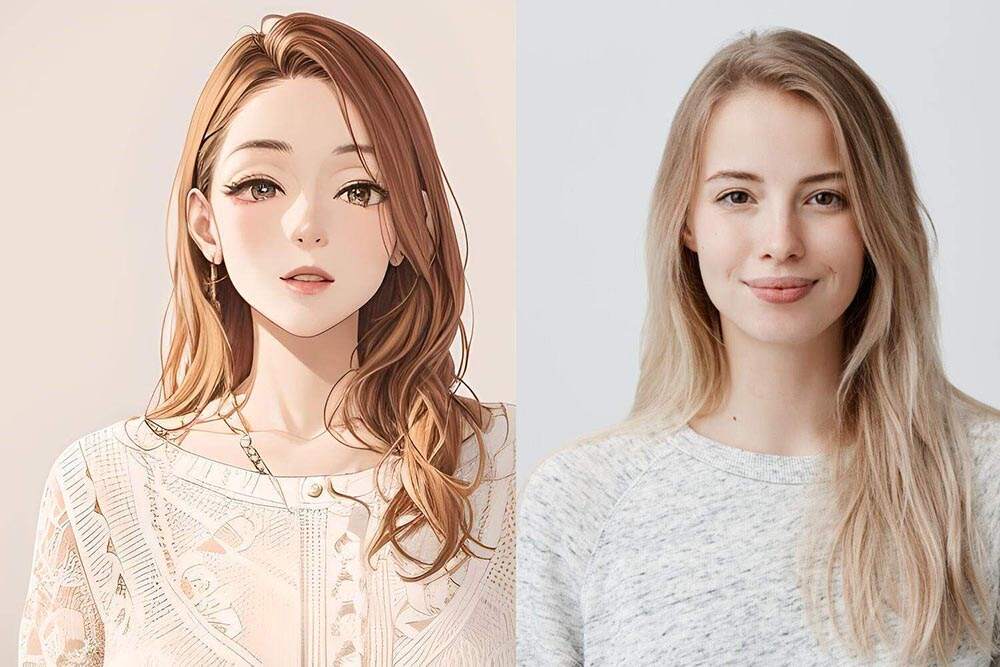 That gap between imagination and execution is precisely why anime AI generators broke the internet. Such tools fail to consider the fact that you have failed to clear high school art class. Drop in a hyper-specific prompt — say, "sad kitsune girl, cherry blossom rain, Studio Trigger style" — and within seconds you get what would have cost an illustrator days of work. The results are sometimes breathtaking. Sometimes your character mysteriously acquires extra fingers. But that's half the fun. How then do these things work? Most anime AI generators are conditioned on massive libraries of existing anime art. We're talking tens of millions of images — Miyazaki classics to late-night Pixiv uploads from artists running on instant noodles and sheer devotion. The model learns the patterns: the way hair flows in a fight scene, what soft lighting looks like on skin, why shojo manga eyes are the size of dinner plates. The diffusion model — the newest technology powering much of this — works like this: you feed the AI pure visual noise and it progressively sculpts an image guided by your prompt. With each pass, noise fades and structure emerges. Think of it as darkroom photography, except the darkroom is a server rack of GPUs and the photographer has consumed every anime in existence. Platforms like NovelAI, Niji Journey — Midjourney's anime arm — and SeaArt have each found their audience. NovelAI is built around Danbooru-style tags that give power users a near-cheat-level advantage. Niji Journey leans casual, imprecise, and experimental by nature. SeaArt splits the difference, offering accessibility without sacrificing too much creative control. The thorniest problem in all of this? Character consistency. Tell most tools to generate your character a second time and you'll receive a stranger in the same clothes. For anyone attempting real narrative work or a comic series, this inconsistency is maddening. Then LoRA models arrived and rewrote the rules. With a LoRA — Low-Rank Adaptation — you train the model on a small reference set of 20 to 30 images of your character. Post-training, the model retains that character. Not perfectly. But enough so your purple-eyed swordsman in panel two doesn't become a green-eyed accountant by panel five. Who exactly is behind all these generations? A broader audience than you might think. Indie game developers with no art budget. Webtoon and manga creators using AI-generated panels as placeholders while final art gets drawn by hand. Authors who simply want to visualize their characters for the first time. And an entire content ecosystem on social media generating AI characters — whether as a business or a cry for help, depending on your perspective. Some artists are angry — and not without reason. A lot of the early training data was scraped without consent. That's a real grievance, not gatekeeping. The conversation about crediting and compensating artists for AI training data remains wide open. Far from it. Still, the tools are here. People are using them. Artists themselves are beginning to explore them — for mood boards, for presenting lighting references to clients, for visual research they'd otherwise spend hours hunting down. Prompting is its own skill. What hentaianime.video newcomers don't realize is that using an anime AI generator hoping to get lucky is like handing GPS a random set of coordinates and asking it to find you something good to eat. It'll navigate to something. Just not the thing you had in mind. Good prompting has a consistent structure: style first (anime, detailed lineart, cel shading), then subject, mood, lighting, and finally a negative prompt specifying what you don't want. Negative prompting is far more powerful than most beginners realize. Telling the model "no extra limbs, no text, no watermark" does more heavy lifting than people imagine. Iteration is the real game. Run eight outputs. Select the best. Feed it back as a reference. Run eight more. It's not "press button, receive masterpiece" — it's a conversation where one party speaks entirely in pictures. So what comes next? Video is the obvious next step, and it's already underway. New generators can already animate characters with anime aesthetics, including lip sync, idle movement, and blinking. The quality wavers, especially on hair and hands — hands remain the nemesis of every AI, human or otherwise — but the direction is unmistakable. Real-time rendering is starting to become a reality. Several tools now let you draw a rough outline and watch it become finished anime art in real time. This isn't about replacing artists — it's closer to having a wildly fast, mildly chaotic creative collaborator. Whether that's exciting or terrifying probably depends on where you're sitting. But it's already here, and the ones getting the most out of it stopped arguing and started making things.